English| EUR
Suggested for you
More currencies
Choose a language
Every August, travellers scanning webcams of Troms County ask the same thing before they book a flight north. The answer for the Lyngen peninsula is more layered than a simple yes or no, because the snow that vanishes from the fjord shore never leaves the ridgelines above it. This page sets out what is lying on the ground right now, at what altitude, and how that changes between now and the first hard freeze.
Quick answer
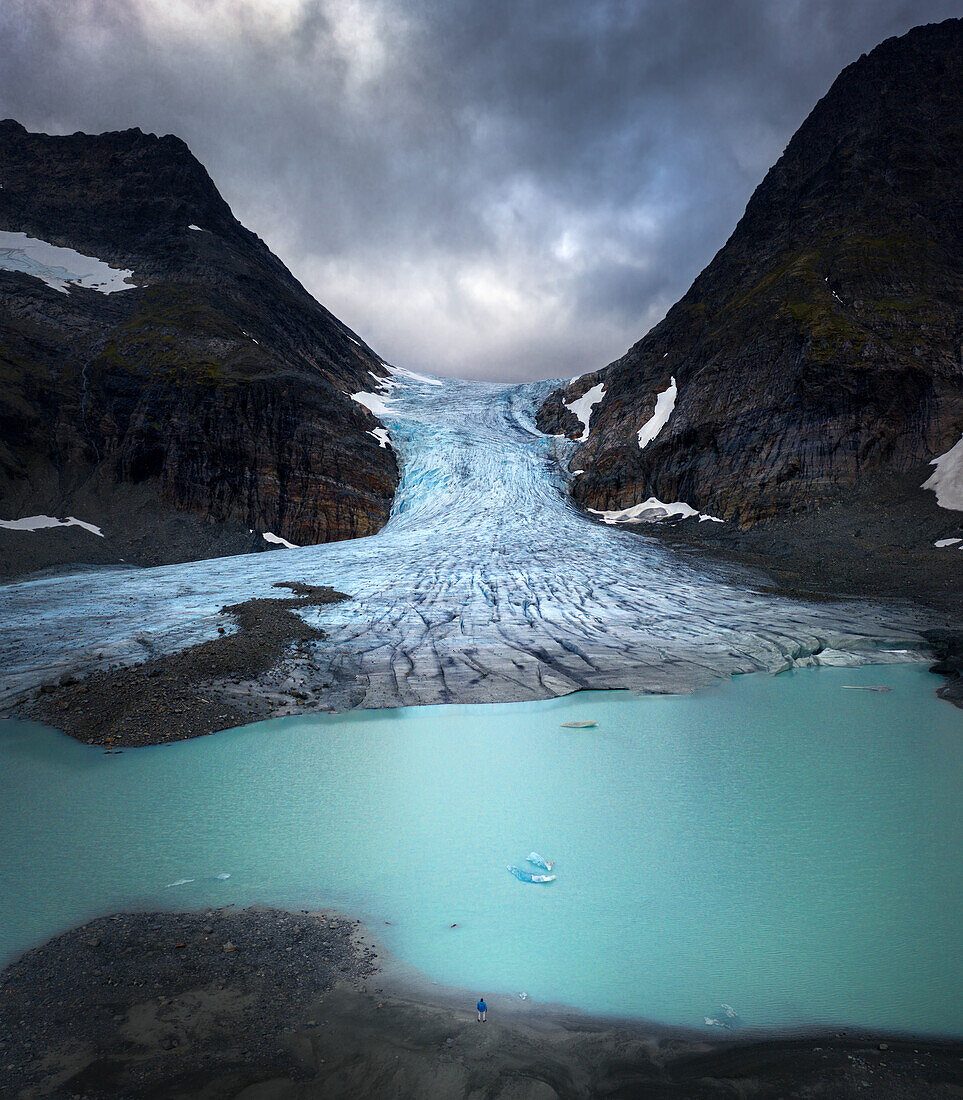
Yes — as of mid-August 2026, snow persists in the Lyngen Alps above roughly 1,000 metres, on north-facing couloirs and on the Jiekkevarri glacier fields, though the fjord-level valleys are bare and green. The range is a free-access public area with no entrance fee, open around the clock. Reliable snow cover down to road level typically returns from late October onward.
Jiekkevarri, the highest summit on the Lyngen peninsula at 1,833 metres, carries permanent ice barely fifty kilometres from open sea — an unusual pairing that explains why the answer to is there snow in the alps now differs so sharply depending on which contour line the question means. Maritime air off the Norwegian Sea keeps the fjord shoreline mild and snow-free through July and August, while the same moisture, lifted over the ridge, feeds glaciers that never fully melt out. The practical consequence is a range split into two zones. Below about 600 metres the valleys around Lyngseidet, Furuflaten and Koppangen are birch scrub, meadow and meltwater streams in high summer. Above 1,000 metres, north-facing gullies and the glacier tongues of Jiekkevarri, Store Lenangstind and Balgesvarri hold firn — old, compacted snow that has survived at least one melt season. Visitors photographing the range from the Ullsfjord side in August will see white in the upper third of the frame and nothing below it. Anyone searching Lyngen Alps snow conditions with a snowmobile trip in mind should read those two zones as different seasons occupying the same map. Context matters for the calendar. The first durable snowfall on the summits usually arrives in September, though it comes and goes. The snowpack that supports motorised and ski touring across the plateau builds through late autumn, consolidates in the polar night, and reaches its most stable depth between February and April — the window when guided operators run their programmes and when the Lyngsalpene, in its Norwegian name, looks the way most photographs suggest. Summer arrivals are seeing residual glacier snow, not that snowpack. What to do with the answer depends on the goal. Travellers who want to stand on snow this month can do so, but it requires gaining altitude on foot, and glacier terrain carries crevasse risk that rules out casual wandering. Travellers who want a snowmobile experience should treat a visit now as reconnaissance and book against the winter season. Either way, the honest framing of is there snow in the alps now is that the Lyngen Alps never entirely lose theirs — the range simply moves its snowline up and down a thousand metres each year, and the month of arrival decides which version of the mountains a visitor meets.
“The Lyngen Alps never entirely lose their snow — the range simply moves its snowline up and down a thousand metres each year.”
The Lyngen Alps maintain residual snow on glaciers and high-altitude peaks throughout the year. For snow-based activities like snowmobiling, the period from January to April provides the most consistent snow cover and stable winter conditions.
Cold, -15°C to -2°C
Deep snow cover facilitates optimal snowmobile access and winter sports. High elevations remain snow-capped during this time.
Variable, 5°C to 15°C
Snow recedes to high-altitude glaciers and shadowed northern slopes. This window is primarily suited for hiking and glacier viewing.
Cooling, -5°C to 5°C
Early snow begins to accumulate on peaks by October. Conditions transition from autumn terrain to winter snowpack.
Verdict: The best period for snow-based activities is February to March, when snow accumulation is deepest and reliable for travel.
This plan suits first-time visitors with a rental car and moderate fitness who want to see the Lyngen Alps' snowfields and glacier tongues in a single day. Allow roughly ten hours door to door, working within the 08:00–18:00 arrival window.
Start at the village on the eastern shore of Lyngenfjord and get your bearings against the ridgeline. Budget 30 minutes for parking, a coffee and a look at the day's cloud base over Store Kjostinden.
Follow the marked path from the Blåisvatnet car park at Koppangen toward the glacial lake below Strupbreen, about 45 minutes each way over loose boulders. Wet rock is common here, so plan slow footing rather than fast pace.
Spend an hour at the lake shore where the glacier's residual snow sits above the water line. Midday light gives the clearest contrast between rock, ice and remaining snowfields.
Return to the car and eat at the harbour, roughly one hour. There are no shops on the trail itself, so carry food in with you.
The 40-minute coastal stretch gives repeated sightlines to Jiekkevarri, the range's highest summit. Pull into marked laybys rather than stopping on the carriageway.
Walk the lower valley section toward the Steindalen glacier, turning back after 60–75 minutes to stay inside the window. Check the return time before you set off.
Be back at your vehicle by 18:00 as advised, when light and visibility begin to drop across the valleys. Details on guided snowmobile routes are covered on the tour booking pages.
The Lyngen Alps are located in Troms County, Norway. The most common approach involves traveling from Tromsø via a combination of road transport and ferry crossings.
E8 highway towards Breivikeidet, then ferry to Svensby
Line 400 from Tromsø to Breivikeidet, then ferry
Ferry from Breivikeidet to Svensby
Check the Statens vegvesen website for real-time road status, as snow and weather conditions frequently impact mountain passes and ferry schedules. Plan your travel within the best arrival window of 08:00–18:00 to ensure sufficient daylight for navigation.
The Lyngen Alps are a public access area available to visitors throughout the year. The region remains accessible at all times, allowing for flexible exploration of the terrain.
Snow can linger in the Lyngen Alps well past the melt season, so run these gear and safety checks in order before you head into the terrain.
Everything you need to know about is there snow in the alps now
As of August 2026, the Lyngen Alps experience a summer climate where snow is primarily found on high-altitude peaks and glaciers. While lower elevations are typically clear, travelers often wonder is there snow in the alps now when planning mountain excursions. Glacier remnants remain visible throughout the season at higher elevations. Understanding that conditions fluctuate with elevation helps manage expectations for your visit. Many visitors inquire if there snow in the alps now to prepare for hiking near permanent ice fields. While snow is not universal across the landscape, these northern mountain regions maintain significant frozen reserves. The best way to track local conditions is to monitor official regional weather updates before your departure. Since the area features rugged terrain and mountain peaks, asking is there snow in the alps now is a standard part of preparing for alpine treks. Hikers should be prepared for varying surfaces including loose scree and patches of firm, compacted snow near the summits. Checking current local reports ensures you have accurate information for your specific altitude. During the height of the Norwegian summer, snowmelt creates high runoff in streams, a key LSI for this region. While the lowlands are accessible for trekking, high-altitude navigation requires awareness of these residual winter conditions. Local topography dictates that glacial fields persist even when temperatures are mild in the valleys. Visitors interested in Lyngen glacier hiking often ask is there snow in the alps now to verify trail accessibility. At high elevations, the terrain remains consistent with northern maritime alpine environments, providing views of glaciers and fjords. Please consult the official site for real-time mountain safety bulletins before heading out.